personal history
Ours for Ever: 2023, the Year that Was
In the third of his eponymous journeys, the fictional psychiatrist, Hector, goes in search of time. Early on, he has a vivid dream in which he is travelling on an empty train. Whilst moving between compartments, he notices something odd:
[that] the faster he walked up the corridor, the more train slowed down … If Hector stopped walking altogether to get a better view, the train would speed up, which was a little annoying.
I’ve been thinking about time a lot lately. Encounters with death, disease and decay have given me a jolt. Our days – my days – are clearly numbered.
‘We can ask and ask but we can’t have again what once seemed ours for ever,’ the narrator of J.L. Carr’s A Month in the Country observes.
2023. We can’t have it again but we can retrace its steps – in my case with the help of the diary I kept. Here, then, are its highs and lows…
The year began with a crossing, as my wife, kids and dog joined me in Brisbane following a week-long road (and ferry) trip that began in Hobart.
Well, we made it to Brizzie, at about four p.m. yesterday, and with nothing going horribly wrong. No crashes or conflict; no breakdowns or breakups. A couple of missteps (wrong turns and what-not), but no real mishaps.
‘Sorting In’, 4:35 am, Thursday, 12 January 2023

Would I be able to adapt to our new life together in Queensland, having spent a year here alone? Before we set out, I wasn’t so sure…
I learned that I can get on with dudes, that I enjoy helping peeps, that I’m a misanthropic loser only some of the time. All very useful [insights], I’m sure, but can the ‘new’ Timm co-exist with the ‘old’ Timm, the father and ‘usband? New year, new challenge.
‘End Game’, 5:46 am, Saturday, 31 December 2022
But I needn’t have worried so much.
Me and the wife … are getting on well, and I reckon we can make a go of it. Yippee!
‘Sowing the Seed’, 6:23 am, Monday, 16 January 2023
For the first time in their lives, my son and daughter changed schools. A stressful experience? Not so much.
The kids went well yesterday. A was very calm and composed, taking himself off to [high] school by himself. E did really well too, playing with another new kid and then with older kids on the basketball court, even scoring a basket. Phew – they’re gonna be okay!
‘A Welcome Fail’, 5:00 am, Tuesday, 24 January 2023

New year, same old job for me. Surprise, surprise – I wasn’t enjoying it.
Hence the need to bite the bullet and write a bestseller using every spare minute I have. That’s my aim for the year.
‘Publish or Perish’, 4:43 am, Tuesday, 31 January 2023
And write I did, finishing the first few chapters of a steamy thriller called Under Your Skin before losing hope. Elsewhere, my hopes were realised…
E loved her band rehearsal yesterday. She said she felt like crying at first, but then her band leader made everything so easy. And playing the pieces was so much fun. What. A. Relief. How happy am I!
‘High Note’, 4:19 am, Wednesday, 8 February 2023
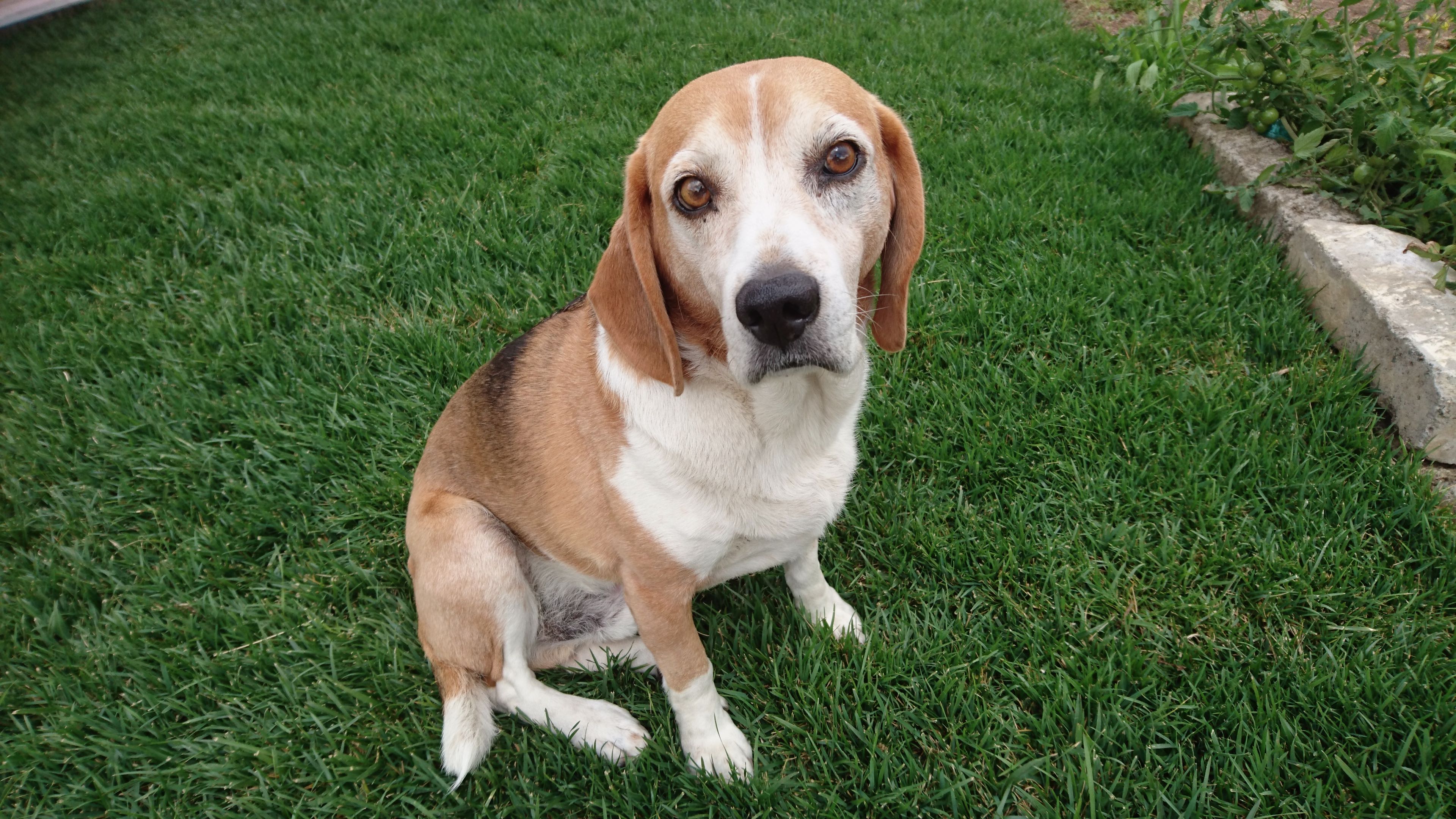
Work continued to irk me and some weeks we barely managed to pay the rent. Then our elderly beagle, Roy, left us, having seen us safely into our new home.
Yesterday I took him to the see the vet, and the vet was categorical: there was no hope for the old fella … I was staring into his eyes as he went still, as the light … went out.
‘Sleeping Dogs’, 3:54 pm, Saturday, 25 March 2023
But life went on and we passed another milestone.
A’s birthday! He is officially a teen, even though he’s been behaving like one for months. (In a good way.)
‘Fickle Friend’, 4:36 am, Tuesday, 4 April 2023
As for my wife’s attempt to find work – it worked!
She had her first day yesterday as a permanent employee at the Ipswich Library.
‘Hot and Sticky’, 4:44 am, Friday, 17 November 2023
Some things were music to our ears.
A was awarded a Certificate of Distinction for music at his school last night.
‘In a Fog’, 5.20 am, Saturday, 25 November 2023
As it happened, the year ended positively. Positively negative.
Two nights ago AJ took a Covid test. Positive. I did the same. Positive too! Having dodged it for years, I’ve now got this much-storied virus.
‘Positively Positive’, 5:52 am, Wednesday, 20 December 2023
In reflection, the year – for me – was long, for I kept looking, failing, learning. The more I struggled and strove, the slower time’s train moved on.
2023. For a whole year it was ours for ever.
Dear Diary: Finger-pickin’ Good
I love maths. Well, I love digits. Actually, what I love is my fingers.
(Are, asks the pirate.)
Speaking of bad starts, here’s a really good one from the biggest book since war teamed up with peace:
He speaks in your voice, American, and there’s a shine in his eye that’s halfway hopeful.
Yes, I’ve started reading another novel: Don Delillo’s Underworld. The first chapter is a cracker and has got me all excited again about words. (Or whyeds, speaking in your voice, American.)
Overnight, Iga Swaitek won her fourth French Open and yesterday the Hawks beat GWS to flap themselves into finals contention.
Speaking of which, I think I’m back in the game, following a monster musical session yesterday morn. Using my fingers (those on my hands and in my head), I reckon I’ve picked the lock to musical freedom, cracked the safe housing sound delights.
Hyperbole or just an average amount of perbole?
Either way, my fingers are flying over the keyboard, as I play my pieces, practise scales and arr-peggios (as the pirate says) – and as I kinda improvise, kinda using the kinda knowledge I’m kinda accreting about modes.
Obviously a lot of it is physical: I’ve put in the hours of repetition repetition, playing, playing, playing. But there’s a mindset that goes with it. A devil-may-care swashbuckling parrot-on-the-shoulder walking-the-plank psychological swagger.
A looseness and a loudness. (And an allowed-ness.)
I’m feeling it in my singing and trumpet-playing too, as well as on the drums.
Thanks universe!
Today? E’s soccer, shopping, lunch with P and V, maybe some tennis with M and G, and definitely more music.
Shiver me timbres!
The Play’s the Thing: On Being the Bearded Boy
For every action there’s a reaction – or, in my case, an over-reaction.
Not long ago I got some bad news: Jesus doesn’t want me for a sunbeam. My dream job wasn’t mine after all.
It was a blow, of course, and one I responded to in the usual way: I spat the dummy.
That’s it, I thought, angrily. No more working for the man. From now on I’m going it alone. As a writer. On Substack. Because ‘writers earn a living doing what they love’ on the Stack.
Okay. But which writers?
Writers like me, surely. Writers brimming with brilliant ideas.
Brilliant ideas like… The Bearded Boy!
He turned fifty last year, the bearded one. Me, I turned fifteen. Together we’re Timm – puzzled parent, partner and employee, perennial pupil and apprentice. Join us on the front line of our privileged yet perplexing life as we struggle to square the circle of existence.
Angst-ridden analysis of the absurdities of adulthood – that’s what it was supposedly all about.
No-one hates waste more than a wannabe writer. Here, then, are some ‘highlights’ from the Boy’s first (aborted) bulletin…
I just don’t get it. I’m clearly a genius and yet I’m still expected to prove it.
People won’t publish my (brilliant) books until I write them, or give me PhD scholarships until I apply for them. And they won’t give me the job I want until I stump up evidence of my awesomeness, as if I’m competing in a country fete.
And even when I do they’re still not convinced that I’m the best bloke since sliced bread – me, the Bearded Boy! It’s enough to make a (half)grown man cry (and start his own Substack newsletter).
Adult life is all about destinations, dead ends, standing still. I want to keep moving. I haven’t got time to stop and tell you where I’m going. I don’t know!
The bearded one wants me to redirect the river, so I can reach my destination sooner, so I can cash in at the casino where I’ll win big. But I just want to be washed along, to ride the rapids. Eventually I’ll arrive at the sea, where I’ll sail, like Reepicheep, into the sunset, into the next great unknown.
My genius isn’t for ‘results’. Indeed, it spurns and despises such illusions. I don’t ‘achieve outcomes’, I mess about. The play’s the thing. And I don’t do it because it’s good for me or for the world – I do it because I’m a bearded boy and I have to. (I’m playing now.)
If you get it, I salute you. Together let’s celebrate all things ineffectual and unfinished. The Bearded Boy is nothing if not half-baked. All ends are dead. Childhood is too good to be left to the kids.
And finally: When you’re finished you’re finished.
One day I might return to the Stack. Now, though, I’m off to start something else.
Regulation Punishment: Exploring the D’Aguilar National Park (Part 1)
Of all the good things my new home in Brisbane has to offer, the D’Ag is probably the best.
A boot-shaped strip of bushland whose toe has a hold in the city’s western suburbs and whose top touches on the southern fringes of the Sunshine Coast Hinterland, the D’Aguilar National Park sports the usual array of natural sights and sounds, native plants and animals.
According to the experts, visitors can expect to experience rugged gorges, rock pools and rainforests, not to mention bopple nut trees, Hiller’s snub-nosed katydids and Mount Glorious torrent frogs.
Okay, so maybe not the frogs, torrents of which there are not. (The species hasn’t been seen since 1979.)
In fact, the least interesting thing about the D’ag is its name. Situated on land traditionally owned by the Jinibara people, the park bears – with awful irony – the name of George D’Aguilar, the author of Regulations and Punishments of the British Army, a best-selling textbook from the early 1800s.
Three hours into our walk around the Enoggera Reservoir, a lake located at the tip of the park’s toe, this seemed all too appropriate: me and my family were experiencing the regulation punishment – the pain that usually accompanies such expeditions.

We set out just after ten on a Saturday morning, me, my wife, and our son (13) and daughter (9), driven by my sudden desire to get back to nature and by my wife’s love of bushwalking.
Despite a few difficulties, the ensuing seven-kilometre hike had its highlights.
Early on we narrowly missed being mobbed by a wave of water-borne tourists.

The track wove its way through trees aplenty – some wearing wasps’ nests like bumbags and others playing dress-ups with ‘grandfather’s whiskers’ (a kind of moss).

At times we wondered for whom the bell birds tolled, for toll they did.
We kept catching tantalising glimpses of our destination – the dam wall.
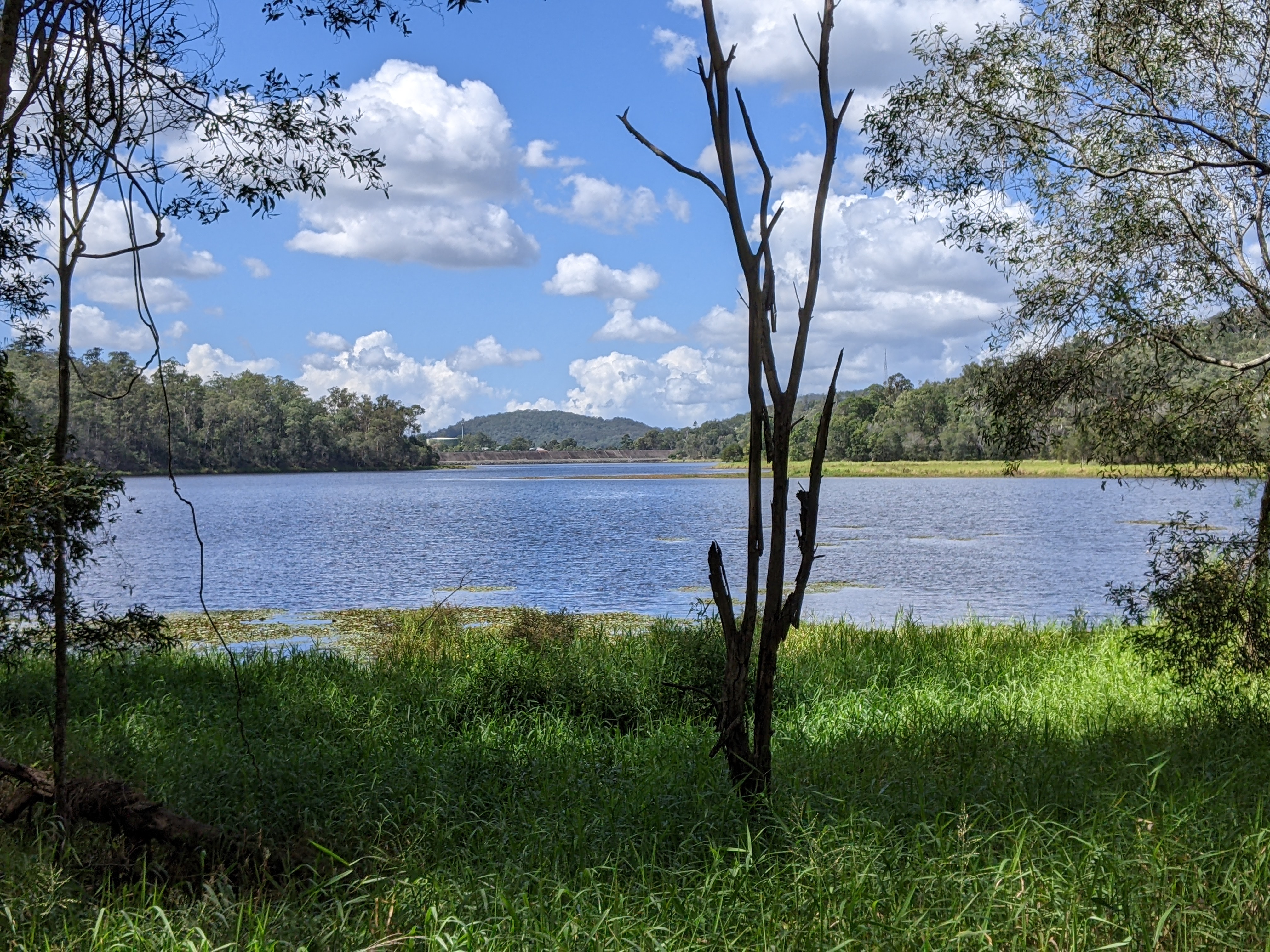
We stopped for lunch – bread, cheese, relish, grapes and nuts – in a shady grove not far from Enoggera Creek itself. Several groups of walkers went by, and the kids begged me (in vain) not to greet each one with my joke of the moment: ‘Ah, there you are – just in time for lunch!’
Back on the track, we day-dreamed about swimming across the lake’s narrowest arm, but the shore was choked with water lilies.

Around one bend we witnessed wildlife of a different kind: teenage boys swinging from the trees.

And then, at long last, we reached our destination – the ‘damn’ wall. As big as it was, it couldn’t contain our relief.

The worst, however, was yet to come.
Stumbling into the park’s ‘Discovery Centre’, we discovered that the café was about to close. For a moment we faced an uncertain future – one averted by take-away milkshakes and a long-awaited swim.
We’d made it!
Lolling by the lake, the trials and tribulations of our walk already half-forgotten, we vowed we’d return to explore more of the park.
Well, I did.

Diversionary Tactics: Going Nowhere, Getting Somewhere
The legendary blues singer, Robert Johnson, was blessed: he came to a crossroads just once in his life.
Me, I’m not so lucky. Not only am I anything but a great musician – Johnson became a blues god when he supposedly sold his soul to the devil – but I keep stumbling across them.
Crossroads, that is.
Since submitting my thesis, I’ve been beset by doubts and distractions. Should I expand my story into a novel or should I leave well alone? Should I stay on the straight and narrow or widen my horizons?
Should I go this way or that?
My journal, poor suffering soul, bears witness to my meandering missteps.
They begin in mid-October, when, buoyed and emboldened by my thesis-writing experience, I get side-tracked by the Faber novel-writing scholarship, and an application I never submit.
Within days I’m eyeing a different diversion. Having just received confirmation of my aboriginal ancestry, I contemplate applying for an Indigenous Coffee Creative grant, even though I’ve already started exploring my ambivalence in an essay I think I might enter in the Kill Your Darlings non-fiction prize.
It’s easy now to look back over my life and see supposed signs of my ‘aboriginality’. There are the unexplained affinities I’ve felt with certain people and places. The bush, for example. Ever since I spent two years in western Queensland as a kid, I’ve been drawn to the land. And not just in the abstract way most white Australians always have been…
I don’t – apply for the grant or finish the essay. Instead I stumble on, staying, for the moment, on the beaten path.
Within a week I’m toying with pursuing writing as a profession, by enrolling in a Master of Writing.
Mastering that impulse, I impetuously take the next turn, writing three stories: one for the Neilma Sidney prize (not submitted), one a titillating tale, one a work of flash fiction.
He asked for whisky because he remembered he’d liked it, long ago. There was some argy-bargy at the bar over how he wanted it, so he wandered off, finding himself in the beer garden, which was half-full with men and women and music. He planted himself in a corner, next to some plants. Dumping his backpack on the table, he began to go through it, looking for a clue. Before long, a woman in black brought him a glass. On the house, she said, with a wink. He stared at her and used his new powers to freeze her where she stood. Not his type, he decided. Tucking a credit card into the top of her skirt, he let her go, with a wink. She went quickly, stopping in the doorway to study him. Funny, he thought. The further she got from him the closer to her he felt.
Dazed and dishevelled, I duck back on to the main drag.
In mid-November I come to yet another crossroads: Podcast Parade. Making the turn, I pen poems and scraps of piano music for ‘Bitter Sweet Nothings’, an audio work I park when I discover I don’t have the ability or equipment to produce it.
Then I get my study results, which are good enough to send me scurrying down another side alley. Before long I’ve submitted an adaptation of my exegesis to Island magazine. (No response as yet.)
Returning to the high street, I briefly consider becoming a teacher, having had some success at work as a coach, and then an entrepreneur, having fallen under the spell of some of my sillier ideas.
The devil being only in the detail, I move on.
Finally, in early December, I reach my last junction (for now); on one side lies writing as a craft, on the other writing as a hobby. Unswayed by either option, I plod back to the present.
The truth about Robert Johnson’s turning point is now lost in legend. As he left his crossroads (real or imagined) did he know where he was going? Or was his subsequent success an unknown destination, recognised only when it was reached?
The key to life, I suppose, is to keep on walking, eyes on the horizon, going nowhere in the hope of getting somewhere. Only later, looking back, does the path become clear.
Until then, my fate lies in the lap of the gods.
Unless I decide to play the blues, of course, in which case my destiny is in the hands of the devil.
[Photo by Mike Enerio on Unsplash]
Making the Crossing: Roy Bridges, Tasmania and Me
Almost a century ago, in 1926, the popular Tasmanian-born writer, Roy Bridges, arrived in England for an extended stay, having just published his seventeenth novel. He had been living in Melbourne with his sister, secretary, and housekeeper, Hilda (herself a successful author) since 1909. The death of their mother, however, had broken up their home, and Roy’s restlessness – his ‘nervous curse’, as he later called it – sent him on his way across the seas.
Roy’s visit to Britain, his first, allowed him to reunite with long-lost friends, to meet with his publisher, and to see the land whose history and literature he had revered since childhood. It gave him a chance, as well, to experience new ways of living, thinking and writing, and an opportunity, crucially, to make a fresh start.
And yet by the end of the year, Roy was on the boat back to Australia, driven out of England by the loneliness and depression that had afflicted him in London, and by the demons that had finally overcome him on a visit to York. Roy’s hasty retreat heralded the beginning of the end – the end of his attempt to break with the past: his own and that of his home state, Tasmania, which loomed large in his imagination.
Within ten years Roy would be a captive on the ‘prison island’. For, in 1936, he retired with Hilda to the family farm in southern Tasmania, where, isolated, impoverished and unwell, he wrote his remaining eight novels – several concerned with the cruelty of the island’s convict past – and scores of letters in which he bemoaned his fate and his declining literary fortunes. There he lived out his final days, dying, in Hobart in 1952, unfulfilled and largely forgotten.
As I set out a year ago to write Roy’s story – my story about ‘Roy’ – I decided I wouldn’t make the same mistake. Like Roy, I was dogged by demons and haunted by the past; like Roy, I was faced with a dilemma: stay and stay safe or go and confront my fears; like Roy, I chose to go. Unlike Roy, however, I have not retreated.
In February I moved to Brisbane from Hobart. It was the bravest thing I’ve ever done. It was also the most selfish – I left my family behind, after all. (They join me here soon.) And yet it was also the best thing I’ve ever done. By going it alone and making a new life in a place filled with bitter memories, I’ve faced and overcome many of my fears. Most importantly, I know now that I can live with myself, and thus that I’m fit to live with others.
I know, too, that I can be the kind of writer I want to be. This year I made not only the crossing (from Tasmania to the mainland), but ‘The Crossing’ (my honours thesis). I made my story and I made it to my liking. In doing so, I re-made myself – something, it seems, Roy Bridges wasn’t able to do. It’s an act I hope will rewrite my ending, leaving me feeling less unfulfilled than Roy, if no less forgotten.
Mind Games: A Crash Course in Staying the Course
Coleopterology. It’s a word that scores a minimum of 22 points in Scrabble and refers to the study of beetles.
Sadly, there’s no term for the study of the Beatles – Beatleology is just a made-up word (boo, hiss!) and scores only 17 in Scrabble – but that hasn’t stopped musicologists concocting a system which pegs Paul as the happy Beatle, George as the holy one and Ringo as the hedonistic one. (Pete Best is the has-Beatle.)

As for John, he’s always been seen as the brainy Beatle. This view (confirmed by the shape of his specs) is based on the fact that J-Lenn (a) wrote books, (b) penned some pretty deep lyrics, and (c) lay around pondering world peace, undisturbed by anyone except his wife, a few celebrity friends and a roomful of reporters.
Lennon’s main claim to fame – for the purpose of this post, at least – is his song ‘Mind Games’, which he recorded in 1973. It’s a cruisy number that peaked at eighteen on the US charts.
As good as it is, though, the best thing about the tune is its title. Mind games – they’re what I’ve been playing for the last eight months.
Yes, this post is actually all about me.
It’s also (briefly) about grizzlies. Everyone knows that a bear with its paw caught in a trap will chew off its own limb rather than let its porridge go cold. Pop Will Eat Itself never covered Lennon’s song, but those musos do tell us something basic about the brain: that the organ at the top will eat itself if it doesn’t have some other bone to gnaw on.
A year ago, as my regular reader – can you hear me, Major Tom? – might remember, I gave myself something meaty to munch on mentally: postgraduate study. Hot on a hunch, I enrolled in a two-year Honours course at the whizbang University of Vandemonia, scoring myself a bonus 21 points (for ‘scholarship’).
So, as my first year fizzles out, how have I done? Have I eaten myself out of head and home? Or have I dined out on the ‘mind games’ of study, preserving my sanity and keeping myself out of a psychological pickle?

Well, the short answer is yes – or rather affirmative (22 points). Study has saved me from myself. My course has helped me stay the course, as a full-time worker-dude, a half-decent dad and a sub-par music-maker. Mission accomplished!
And yet it’s done much more than that, of course. Being an extreme sport, study has forced me to learn and write a whole buncha stuff from and for a whole buncha bright sparks. Wow!
Here’s what I’ve learned. Firstly, that something has been hidden in plain sight from me for twenty-odd years: Tasmania and its stories. And, moreover, that in this something I’ve found myself a field of study, a source of material and inspiration, and, dare I say it, a home for my head as well as my heart.

Having stumbled on to this path, I know now what I want to be doing. I want to be reading and writing about ‘the wandering islands’, to purloin a phrase from the poet, A.D. Hope, himself a once-were Tasmanian.
I’ve learnt other things too: that Tasmania isn’t one island but many, on the map and in the mind, and that although I work in the passport office helping others to travel, I belong in the world of words and ideas, where real books and not insipid little travel documents are the key to all countries.
(That’s nice, dear, but where’s my passport?)
Pesky travel permits aside, here’s what I’ve pumped out over the past eight months.
Proposals, plans and presentations aplenty, for a start. Half have been about my thesis topic (which, for the record, is ‘Tasmanian-ness’ and the lives and literary fortunes of Roy and Hilda Bridges).
Hang in there!
First I put together an annotated bibliography, thesis plan (‘Building Bridges: Displacement and the British Literary Diaspora’) and a presentation.
Later I wrote a proposal for my exegesis (the theoretical part of my thesis, which will itself be a work of fiction), followed by the exegesis itself (‘No Book is an Island: “Tasmanian-ness” and the Life and Literary Fortunes of Royal “Roy” Bridges’).
Along the way I wrote a critical review and a travel essay (‘A Room (and Tomb) of One’s Own: Revisiting and Re-evaluating “My Northwest Passage”‘), as well as another essay on a topic in Tasmanian literature. Then, just for a change, I prepared a proposal for a podcast, which I produced (‘Foreign Correspondent’).
See what I mean? Study has pushed me to do the seemingly impossible – to write and learn lotsa stuff and to stay on the straight and narrow.
Mind games, hey. Keep on playing them and, as the brainy Beatle says, you’ll make an ‘absolute elsewhere in the stones of your mind’.
Or, failing that, 15 points in Scrabble.
Open, Sesame: Homi K. Bhabha, Hybridity and Me
Remember Ali Baba?
He’s the hero of a famous story from The Arabian Nights, the one in which a poor woodcutter (that’s Ali) finds his way into a treasure cave having overheard its keepers (that’s the Forty Thieves) using the password. After taking a little of the loot for himself, Baba shares the command with his brother (that’s Cassim), who utters it himself, drawing back the door and connecting the cave with the world.
Open, Sesame!
I’ve just had a similar experience myself, as it happens, but I got my password from a Baba of a different kind.
I’ve been sick, you see. Not as sick as some, that’s for sure, and yet sick enough to be room-ridden for a month. Normally I’d have been a mess, mentally as well as physically, and my virtual isolation would have hit me hard. I would have seen it as time out of life, as a state of being at odds with my everyday existence.
You know the mentality I mean. It’s the kind of thinking that puts things in opposing camps, compulsively conjuring up dichotomies. Well or unwell. Happy or sad. Hermit or socialite. Loser or legend. It’s like being the ‘living double of a single fiction’, as the more eloquent Elvis (Costello, that is) aptly puts it.
Normally, then, I’d have seen my illness as sign and put an end to my activities. I’m a bipolar being, after all, and opposites attract. And yet I didn’t – thanks, oddly enough, to a literary critic called Homi K. Bhabha.
I met my Baba early in the university year, when I borrowed a book of his essays. I was trying (and failing) to flesh out my skeletal understanding of postcolonial studies, a field that Bhabha, along with two other luminaries, is credited with creating.
In his book, The Location of Culture, Bhabha takes issue with ‘binary logic’, the mode of thought usually associated with the colonial mindset (and with me). He offers, instead, a different interpretation of the imperial past and present.
The colonial realm, Bhabha argues, does not simply give rise to and reinforce ‘parochial polarities’, as many believe. By acting as an in-between place where back-and-forth movement causes ‘domains of difference’ to overlap, the subjugated space ‘opens up the possibility of a cultural hybridity’.
Bhabha’s words came back to me as I lay sick and despairing. Although I wasn’t quite sure what they meant, I said them nonetheless, drawing back the door and connecting my cave with the world.
Open, Hybridity!
In doing so I escaped my bipolar mindset. It’s possible, I realised, to be both happy and sad, hermit and socialite, loser and legend. And, yes, I could even be well and unwell at the same time and thus keep my dreams alive. Knowing this, I started studying from my sickbed, ultimately acing my essays and making a success of the semester.
I uttered the password and it opened my mind.
Ali Baba’s brother, Cassim, isn’t so lucky. He forgets the command that would free him from the cave. Unable to escape, he is captured by the robbers, who cut his body into four quarters, ‘to hang two on one side, and two on the other, inside the door of the cave, to terrify any person who might attempt the same thing’.
Without the password Cassim is a man divided. His is a state – and a fate – I hereafter hope to avoid, in sickness and in health.
[Drawing by Joan Kiddell-Monroe]
The (Less) Lost Legionnaire: Music, Family and Home
Yesterday I came home.
Dispirited after a day at work, I’d put away my bike and plodded down the path to the front door of the house, where I was met by my seven-year-old daughter, who gripped me in a long hard hug.
‘Dad,’ she said. ‘Do you want to play duets?’
Hear ye, hear ye: music is one of the three best things. The symphony orchestra, for a start, is hard to top. Then there’s the piano, that band in a box, and my musical tube of choice, the trumpet, an ancient instrument first sounded by seven angels.
I’d wanted to be a musician ever since my tune-infested teens, when I dreamed of making sounds like those I struck in the symphonies of Sibelius and the songs of Led Zeppelin.
It was then, too, that I started to feel like a lost legionnaire – a solitary soul wandering the earth in search of home, a conscript separated from his comrades in the last great battle, a disastrous defeat. I’d felt alone and adrift ever since.
Well, less so now.
Yesterday, like Julius Caesar, who in 49 BC was neither lost nor a legionnaire, I crossed the rubicon, to the same sounding of trumpets that heralded the uncrowned king’s fateful deed.
The die was cast on the doorstep of my house, as I stood in the arms of my daughter.
’Sure,’ I said. ‘Let’s play duets.’
Soon we were tripping through our favourite tunes. Later my son joined us on trombone and we played music of my own making: a little trio called ‘The Lost Legionnaire’.
Hear ye, hear ye: never has this legionnaire been less lost.
In music the home key is the aural space to which sound gravitates. In life – in my life – the key to home is music. Music and the other two best things: my daughter and son.
Empty Vessel No More: Coming Back to (University) Life
So, I’m a student again.
How the hell did that happen?
The usual way. I applied, somewhat blindly, to study Honours at a local university, unsure about my thesis topic and even about my discipline. I mean, how could I choose between literature, creative writing and history?
In the end I didn’t have to. I managed to nab myself a scholarship, one that came with a project attached. Over the next couple of years I’ll be studying the papers of two of Tasmania’s most prolific and unheralded authors (who happen to be siblings).
Fortuitously, the project encompasses my three loves. Coursework aside, I’ll have to produce a thesis (creative writing), exegesis (mostly literary criticism) and some kind of public program (history).
Somehow I chanced upon my holy grail.
What does it mean, being a student again?
That I can’t redraft this blog post to death, for a start. (Not such a bad thing.) I just don’t have the time.
What it really means is that I can live a richer life again – which is ironic because study is costly, scholarship or no scholarship.
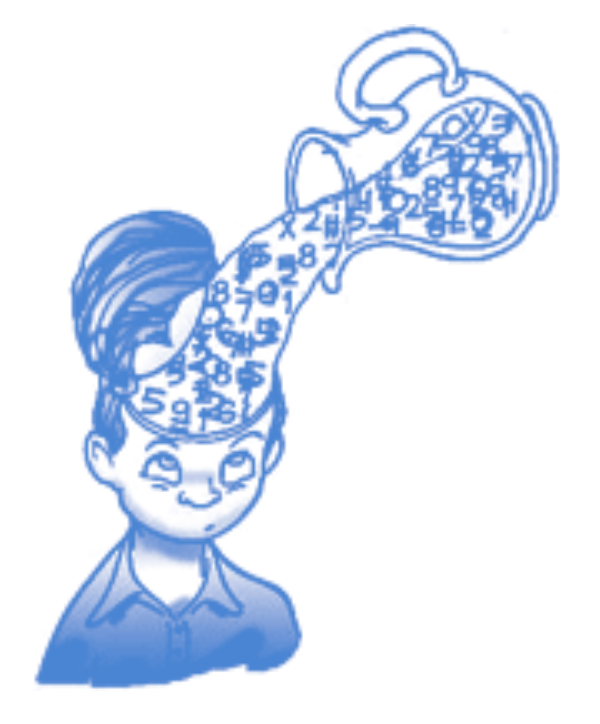
Remember the discredited diagram that purports to depict the teaching/learning process? The one that shows a teacher tipping information into a student’s open head?
Well, that’s how I feel, as silly as it sounds. I feel full again – full of ideas and excitement. Full of life.
Take the past week. I’ve had seminars on research and on writing an exegesis. I’ve been reading about and reflecting on literature and history; travel writing, colonialism and displacement.
I’ve been mixing with writers too, having been to workshops led by an acclaimed local author. It’s been immensely inspiring, all the thought and talk about books and writing. It’s brought me back to life.
Returning to study has reopened my mind, and the ideas are already flooding in. Like the kid in the picture, I’m an empty vessel no more.
The next question is: will I drown in the deluge?
 timm in type